|
|---|
The Red Arrow network was a group of short, limited-stop flat-fare feeder bus services in central London. Most of the network has long since disappeared, with only two routes now remaining. Because the Red Arrow routes were limited stop services, their “E” plates were coloured blue, the same as the express routes. Curiously, many Red Arrow plates exist both with and without full-stops after the abbreviations MON and FRI. The 5XX series was chosen for the Red Arrow routes because it had been free (along with 6XX) since the demise of the trolleybus network on 8 May 1962. (In the Bassom bus route renumbering scheme of December 1924, the 5XX series was used for Country Area routes in the west, from Uxbridge. However, by the mid-1930s they had been renumbered as 3XX with other north-of-the-Thames services.) From the 1990s on, the 5XX series was also used for some County Council tendered services in Essex and Surrey.
![]() The earliest “E” plates for Red Arrow routes had red backgrounds, with either white or black lettering. Now, does anyone have an example they'd be willing to part with…? |
![]() |
![]() This “E” plate probably came from one of the few stops on the one-way working which was not served during peak hours in the early years—an astonishingly rare plate indeed! The plate is particularly unusual as the SEE BELOW description would relate to just a few stops. |
![]() |
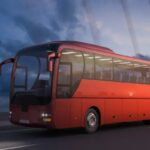
◀ A still taken from a DVD I was watching recently: look at the route 500 “E” plate on the stop, obviously dating from the first days of Red Arrow service when just the 500 was running. It’s black on red! The bus stop is shared with the 36 and there’s a coach stop in the background, so this picture comes from northern end of Park Lane, at Marble Arch. This poster was issued in 1967 to publicise the original Red Arrow service between Victoria and Oxford Street. It features a photograph of a Merlin bus at speed, as well as one of the original, special Red Arrow bus stops. The “G” plate on the stop is also unusual in that there is lower-case lettering on it—in fact, I cannot think of any other that was not all in capitals! ▶ |
![]() |
|---|---|---|
Route 500 was introduced in 1966. Initially it ran during rush hours between Victoria Station and Marble Arch via Hyde Park Corner as an express commuter service. In the off-peak the 500 provided a circular service between Victoria Station and Oxford Circus via Hyde Park Corner, Grosvenor Square and Hanover Square, returning via Marble Arch and Hyde Park Corner, although latterly it ran both ways along Oxford Street. The route has long since been withdrawn. |
||
Route 501 was introduced in 1968 as a weekday-only flat-fare, limited-stop service that ran from Waterloo Station to Aldgate via Aldwych, Holborn and Bank. No evening service was provided. It was later extended to London Bridge. Initially operated by MBA-class AEC Merlins, it was later operated by LS Leyland Nationals and then GLS rebuilt Nationals. The 501 was withdrawn as recently as 2002. |
||
![]() |
![]() |
◀ This “E” plate is astonishingly rare as it would have been used on just one bus stop in Waterloo Road which was not served during rush hours when buses ran into The Colonnades (now part of the Jubilee Line station). |
![]() | ![]() | ![]() This “E” plate is astonishingly rare as it would have been used on just one bus stop at Waterloo which was not served during rush hours when buses ran into The Colonnades (now part of the Jubilee Line station). |
Route 502 was introduced in 1968 as a Mondays-to-Fridays-only route that ran from Waterloo Station to Liverpool Street Station via Aldwych, Fleet Street, St. Paul’s and London Wall, returning via Bank. No evening service was provided. The 502 is covered mainly by today’s route 26. |
||
Route 503 was introduced in 1968 as a flat-fare, limited-stop service operated by MBA-class AEC Merlins between Waterloo and Victoria on Mondays to Fridays. It was withdrawn in 1981 and is covered today by route 211. There was a later Red Arrow 503 between South Kensington and Moorgate, but this “E” plate is not from that route. |
![]() |
![]() |
Route 504 was a Saturday-only service, running (until 14.30 only) between Waterloo Station and Liverpool Street Station via Aldwych, Fleet Street, St. Paul’s and Bank. It was the first Red Arrow route to be withdrawn, lasting not quite to the end of 1969. Paper labels replaced the vinyl stickers that had, in their turn, replaced enamel “E” plates in the 1980s. However, that does not explain why one was created for a route that was apparently long-gone. It is possible that this sticker was for one of the County Council tendered services, but I don’t believe that those labels used the blue backgrounds of express routes. Interstingly, the days of operation are pluralised (SATURDAYS rather than SATURDAY). |
Route 505 was introduced as a Red Arrow service in 1968, running on Mondays to Fridays between Waterloo Station and Marble Arch via Trafalgar Square, Piccadilly Circus and Oxford Circus. |
||
![]() |
![]() |
![]() One of the vinyl stickers that replaced “E” plates. |
![]() |
Route 506 was introduced in 1968 to provide additional capacity over route 38 between Victoria Station and Piccadilly Circus. The 506 ran on Mondays to Fridays via Piccadilly, returning via Pall Mall. It was an early withdrawal and is one of the most difficult routes to find on “E” plates nowadays. The only route 506 stops with “E” plates were at Piccadilly and Green Park, as those at Victoria were of a different type. |
Route 507 was introduced as a Red Arrow service in 1968 running daily between Victoria Station and Waterloo Station via Horseferry Road, Lambeth Bridge and Lambeth Palace Road. It was a short route and there were special flags at Victoria and Waterloo which did not use “E” plates. Coupled with the route being limited stop, there would not have been too many of these plates around, and they are rarely seen nowadays. It is now operated by bendy-buses. |
![]() |
![]() |
![]() |
![]() |
| Both of these “E” plates are likely to date from 1971 when the 513’s Saturday service was withdrawn. | ||
Route 513 was part of the Red Arrow express feeder network and ran between Waterloo Station and London bridge Station via Aldwych, Fleet Street, St. Paul’s and Cannon Street. It was a late addition to the network, and took its number from the service it replaced along Cannon Street: route 13. It was introduced on 24 January 1970 as a new Monday-Saturday operation and brought London Bridge into the Red Arrow network for the first time. Just a year later, in January 1971, the Saturday service was withdrawn due to the drop in numbers of office-workers on Saturdays and the route became Monday to Friday only. The 513 lasted until July 1992 when it was withdrawn and replaced by new route 521. |
||
![]() |
In 2003 route 502 operated three trips a day on Wednesdays, Fridays and Saturdays between Romford Station and Waltham Cross Bus Station via Collier Row, Chase Cross, Stapleford Abbotts, Passingford Bridge, Abridge, Debden, Loughton and Waltham Abbey. By April 2004 the route had been withdrawn between Loughton and Waltham Cross, and in September service was reduced to one Saturday journey only. The 502 ceased running some time after September 2005. Over the years it was operated for Essex County Council by Locallinks, Centra, Imperial and Blue Triangle. ◀ At some point in time, the 502 was a limited stop service, as noted on this sticker.This bus stop panel timetable dates from 1 October 2003. ▶ |
Route 510 is an Arriva the Shires service operating in Essex between Harlow Town Centre and Stansted Airport via Sawbridgeworth, Spellbrook and Bishops Storford. ◀ Over the years Essex County Council produced a very large series of timetable books. This is an Area 1 book dated September 1985, covering the Bishops Stortford/Epping area, and has 216-pages with fold out blue-and-white route maps on art paper inside the front and rear covers. |
![]() |
![]() |
Route 524, also operated by Arriva the Shires, runs between Harlow (Fifth Avenue) and Heathrow Airport (Terminal 5) via Ware, Hertford, Hertford North Station, Panshanger, Welwyn Garden City, Hatfield, St. Albans, Garston, Watford Junction, Rickmansworth, Maple Cross, Denham, Uxbridge and Heathrow Central Bus Station.
|
I don’t know anything about route 535 other than it was a limited stop service operated for Essex County Council. This is a self-adhesive vinyl sticker that would be affixed to a standard Ministry of Transport stop sign flag. ▶ |
![]() |
Route 606 wasn’t actually a London Transport route; rather it was operated by Golden Miller and ran in the Staines area, linking Stanwell Moor and Stanwell Village with Staines town centre. The 606 was separate from the rest of the Golden Miller network. The route has long since disappeared. Normally a blue “E” plate is associated with an express route, but in this case I think it was simply a colour used by the operator in their livery and on their publicity. Also unusual is that the plate does not give the operator’s name. |
![]() |
![]() |
Route 615 was introduced in 1970 as a Monday to Friday flat-fare, limited-stop service that ran between Poplar (Iron Bridge Tavern) and St. Paul’s via Limehouse, Stepney, Aldgate and Bank. No evening service was provided. It was a very short-lived route and was withdrawn at the end of 1971, having run for less than two years. The number was chosen because it paralleled regular service on the 15. Route 615 “E” plates are quite difficult to find nowadays, and are far less common than the route 616 variety. |
Route 616 was one of two express routes numbered in the 6xx series (the other being the short-lived 615 between Poplar and Cheapside) which did not fall into the Red Arrow network. It was introduced on 15 June 1970, running Mondays to Fridays between Cricklewood and Oxford Circus via Kilburn, Edgware Road and Marble Arch, supplementing the 16. In latter days it was reduced to peak hours only, and was eventually replaced by route 16A (which has also now disappeared). This eight-page booklet was distributed to introduce passengers to the 616 and it’s Pay-As-You-Enter flat-fare Merlins. Place cursor over the image to start the animation. |
![]() |
|
|---|---|---|
![]() |
![]() This “E” plate dates from the mid-1970s when the route was reduced to peak hours only. |
![]() This “E” plate is interesting because it combines the lowest-numbered route with the highest-numbered Central Area one, and would presumably have come from a stop in Oxford Street. I would imagine that London Transport avoided making split-background-colour plates as far as possible owing to their additional complexity. |
|
|
|
|---|
| Click on any of the tiles below to go to images of the “E” plates and the route descriptions for that number series. Clicking on any stop flag will return to the home page. |
|||||||||||
|
|
|
|
|
|
||||||
|
|
|
|
|
|||||||
|
|
|
|
|
|||||||
![]() Bus Stops |
![]() Sources |
![]() Bibliography |
|||||||||
![]() Maps |
![]() Links |
![]() Advanced Search |
|||||||||