|
|---|
| Trams & Trolleybuses | Buses | Coaches | Red Arrow | Other Services | Information | Other Signs |
| |||||||||||||||||||||||||||||
![]() B(C) |
![]() B(C) |
![]() B(C) |
|||||||||||||||||||||||||||
![]() TfL BUS STOP |
In 1973 the stop flags were redesigned with a single-coloured roundel replacing the two-colour bulls-eye. The first style used the same size and weight lettering as the original 1935 design (↖), but was changed to smaller, bolder text (↗). |
||||||||||||||||||||||||||||
In some instances, the name of the terminal was on the bus stop sign or adjacent shelter. The type with the name of the stop across the bar of the roundel is a 1980s innovation, contemporary with vinyl “E stickers”. The earliest photo I have of one is dated 1989. I believe the names were vinyl labels stuck onto the bar of the plain red roundel compulsory flags and (if memory serves) also on the white Request stop roundels, obliterating the word REQUEST on the latter. The effect was therefore similar to the erroneous souvenir miniature request stop plates produced for the Museum (though the latter have the word REQUEST at the bottom instead of BUS STOP). The use of these stickers was widespread in Central London. Their function has since been replaced by—as it were—“G plaques” (though they are located above the “E plaques”) on current stops. |
|||||||||||||||||||||||||||||
![]() B(C) |
A picture taken on 16th November 1991 of the (rather scruffy!) bus stop in Charterhouse Street near Holborn Circus with the latter location name displayed across the roundel bar. It looks as if the whole sign is a vinyl label stuck onto the flag. The “E” plates are of interest:
Andrew Colebourne photo |
||||||||||||||||||||||||||||
|---|---|---|---|---|---|---|---|---|---|---|---|---|---|---|---|---|---|---|---|---|---|---|---|---|---|---|---|---|---|
![]() B(C) One point that this flag was displayed at was stop “JA” at Oxford Circus. |
![]() Photo courtesy the London Bus Routes web site. |
![]() B(C) |
|||||||||||||||||||||||||||
![]() B(C) This flag was displayed on stop “V” in Trafalgar Square, outside of Canada House. |
![]() B(C) |
||||||||||||||||||||||||||||
![]() B(R) |
![]() B(R) |
◀ The single-colour version (with the text across the bar in red instead of black) was introduced in about 1970 as an economy measure. I don’t believe any Green Line request stops were done in this manner—at least I’ve never seen any photographic evidence that one existed. | |||||||||||||||||||||||||||
![]() B(R) |
![]() TfL REQUEST STOP | ||||||||||||||||||||||||||||
Tim Drayton, who worked for London Buses in 1979–1981, writes:
| |||||||||||||||||||||||||||||
![]() I don’t know what the code was for a BUS STAND sign—possibly B(S)? |
![]() Although I’ve only seen this single-coloured style as a vinyl sticker for a dolly stop, a photo of an enamel example may yet surface. |
||||||||||||||||||||||||||||
![]() I’ve always assumed that this early LRT-era bus stand design was introduced because the previous bullseye-derived pattern was too easily confused with a public stop where passengers could board. Apparently it was not too succesful, as it was replaced by a more conventional design. |
![]() |
![]() TfL Bus stand |
|||||||||||||||||||||||||||
| |||||||||||||||||||||||||||||
![]() C(C) |
![]() I don’t know what the code was for a COACH STAND sign—possibly C(S)? |
![]() C(C) |
|||||||||||||||||||||||||||
![]() C(R) |
![]() C(R) I don’t know if this particular one-colour variant was ever produced. |
![]() TfL COACHES |
|||||||||||||||||||||||||||
Kim Rennie writes
|
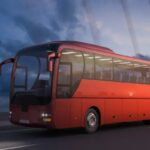
Arriva Shires & Essex 4367 [W367XKX] is a DAF SB3000 with a 53-passenger Plaxton Premiere 320 body. It was photographed on 10 April 2008 in Buckingham Palace Road on Green Line route 757. “Arriva436” photo, from Wikimedia Commons. |
||||||||||||||||||||||||||||
| |||||||||||||||||||||||||||||
![]() Initally, two full-size flags had been used, mounted one abouve the other in a double-height frame. In the late 1940s shared stops began using a single flag split horizontally with smaller bullseyes above and below. No vertically-divided bullseye signs were made for tram stops, as the decision had already been made to withdrawn them over the next two or three years (aside from the fact that there were hardly any spots where trams and buses shared the same stopping places). Although the vertically-divided combination flag became the standard, a few new horizontally-split stop flags were produced. They were reintroduced in 1968 when it became necessary to add the new Red Arrow express service to existing combined BUS & COACH stops.
|
|||||||||||||||||||||||||||||
![]() B(C)C(C) |
![]() B(R)C(R) |
![]() B(C)C(C)A(C) |
|||||||||||||||||||||||||||
![]() B(C)C(R) |
![]() B(R)C(C) |
![]() Phil Picken photograph; Andrew Colebourne collection |
|||||||||||||||||||||||||||
![]() B(C)C(C) |
![]() B(C)C(C) |
![]() B(C)C(C) |
|||||||||||||||||||||||||||
![]() B(R)C(R) |
![]() B(R)C(R) |
![]() B(R)C(R) |
|||||||||||||||||||||||||||
![]() B(C)C(R) |
![]() B(C)C(R) |
||||||||||||||||||||||||||||
![]() B(R)C(C) |
Clive Brown supplied this photo, adding “I’m pretty sure this must have been Farnborough George & Dragon, on 13 June 1981. If it wasn’t there, it was certainly very close, but the fact that it was a FARE STAGE probably means there’s a good chance it was. The next-but-one picture was taken on ‘Farnborough Hill’—there’s a road name plate in the pic.” It was stop number 18204. |
![]() B(R)C(C) |
|||||||||||||||||||||||||||
▲ Regarding the split Bus Request/Green Line Compulsory stop flag, Keith Williams writes: A dual compulsory Green Line/bus request was on the Uxbridge Road, Hanwell for the 607 (later 207), 709, 710 & 711 eastbound, one bus stop before Hanwell LT depot [HL], west of Hanwell clock tower. This is because the next bus stop was immediately outside of the bus garage which of course was a bus compulsory and where there were crew changes and thus parked buses. Hence, the Green Line stop was about 500 yards away at the preceding bus request stop so that stopping Green Lines didn’t interfere with bus movements. I am 100% certain of this fact, because I used that stop myself. I never saw another stop like it, until one day sometime around the mid ’60s, whilst on a 725 in Beckenham on a journey to Kingston, I am 90% certain I saw another one ([in the] Kingston direction). Another B(R)C(C) was in Edgware High Street, northbound. Keith wonders, “Was that [one] perhaps [also] one bus stop before the garage too, which wouldn’t have been a bus compulsory because the next stop would have been the major bus stop for the garage, or would all buses have then turned into the garage whereas the coaches wouldn’t? If so, [it] seems there is a pattern here.” Laurie Akehurst adds, Looking at the section on bus stops you refer to the rare B(R)C(C) [flag]. In 1976 I noted the following examples: |
|||||||||||||||||||||||||||||
| Trams & Trolleybuses | Buses | Coaches | Red Arrow | Other Services | Information | Other Signs |
|
|---|
| Click on any of the tiles below to go to images of the “E” plates and the route descriptions for that number series. Clicking on any stop flag will return to the home page. |
|||||||||||
|
|
|
|
|
|
||||||
|
|
|
|
|
|||||||
|
|
|
|
|
|||||||
![]() “E” Plates |
![]() Stop Flags |
![]() Maps |
Stamps |
![]() Advanced Search |
![]() Sources |
![]() Bibliography |
![]() Links |